Building Community Through Structure: How a Facility Handbook Transformed Our Program
By BECCA CAULFIELD
When I think about our programs, the first thing that comes to mind is our community. Our barn is not simply a riding school, boarding facility, or training center. It is a place where riders come together, sharing values, supporting one another, and building their horsemanship on a foundation of mutual respect and a shared love of the horse.
I am an eventing trainer based at a beautiful facility nestled in the foothills of Colorado, just north of Boulder. I have been fortunate to develop a unique, symbiotic relationship with the facility owner. Our businesses complement and support one another in a way that allows both to thrive. This team approach has provided the foundation not only for a successful program but for an incredible community that continues to grow and evolve.
We are proud of the lasting impact we have had on riders and families, both in our region and across the country.
A Look Back
Before I came to this remarkable property, Triple Creek already had a reputation as a well-respected boarding and sales business with a small but dedicated lesson program. Lynn McChesney, the owner and manager, has built a legacy in our area as the operator of one of the longest-running facilities in the region.
Eleven years ago, I made the decision to leave my mental health-focused career and return to the horse industry full-time. I was entrusted with the responsibility of developing the riding school. This opportunity marked the continuation of my professional journey as a trainer, rider, and eventually, eventing coach.
Our Community Today
Over the past eleven years, the Triple Creek Riding School, along with our camps and boarding program, has grown into an efficient, welcoming, and educational environment for riders of all levels. From children experiencing their first pony ride to upper-level eventers and seasoned adult amateurs, Triple Creek offers a home for all who share a passion for horses.
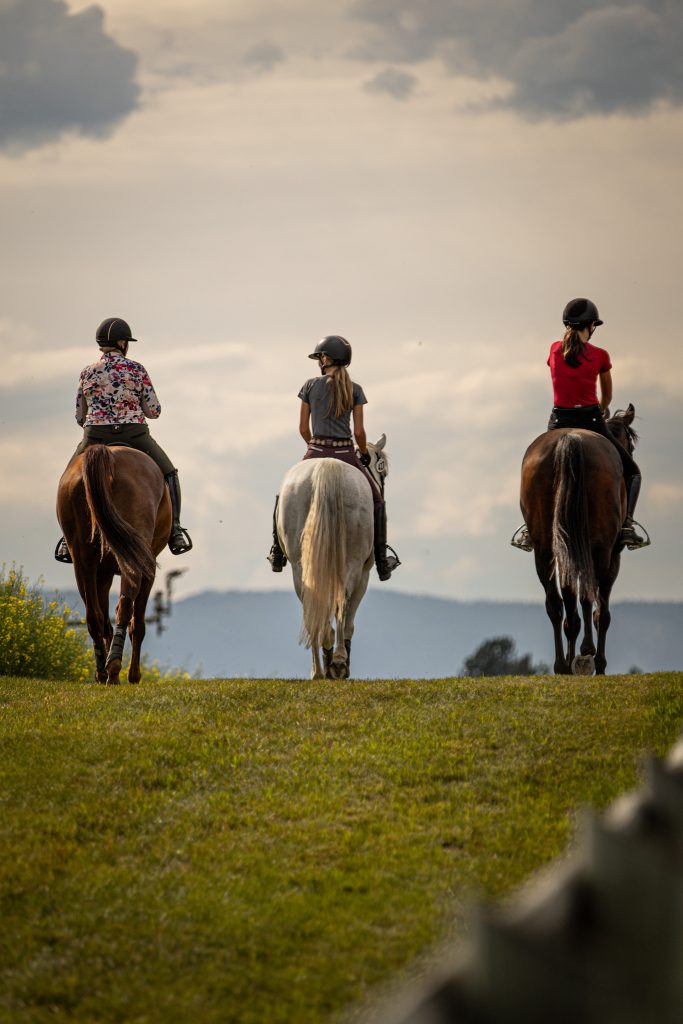
Education remains at the core of our community. We believe that horsemanship goes beyond riding lessons. It is about cultivating responsibility, fostering respect, and developing well-rounded individuals who can succeed both in and out of the saddle.
As with any large facility, maintaining effective communication has been one of our greatest ongoing challenges. It is an area I have always been committed to improving. Fortunately, one of my strengths lies in written communication. Over the years, I have developed countless emails, forms, and educational resources to support our students and families.
Despite these efforts, the volume of questions, repeated information, and inconsistent understanding led me to a solution that has truly transformed how we operate. That solution was the development of a comprehensive facility handbook.
The Role of the Facility Handbook
Our handbook has become an invaluable tool for both our program and our community. Its purpose is simple yet impactful. It provides clear, accessible information that empowers parents, riders, and students to fully understand our program, the services we offer, and the pathways to success based on their individual goals.
The handbook includes general pricing, barn policies, and expectations, all of which allow new and existing clients to make informed decisions about their involvement in our community. It offers structure, clarity, and consistency in an environment that can otherwise feel overwhelming, especially for those new to the horse world.
The handbook is an evolving tool that we edit and evaluate quarterly. This provides the most up-to-date information, new rules for situations that arise, details on new programs and services, and improved communication tools. It also gives us, as a facility, an opportunity to check in with ourselves on what is working and what is not.
Inside the handbook, we outline all relevant rules and expectations. Parents are better equipped to support their young riders. Students gain a clear understanding of the structure of our programs and the progression of opportunities available to them. We have included horsemanship levels, details on boarding services, necessary waivers, and even staff biographies. Our entire team, including support staff, is introduced so that every face at the barn feels familiar, even to new families.
All of these components come together to create a roadmap for becoming part of our community. It sets clear expectations while providing a welcoming, informed introduction to our barn family.
Defining Expectations Through Contracts and Values
In addition to program details, the handbook contains several contracts that we ask advanced program riders and community members to sign. Much like a business defines its values, we have clearly stated the values that our barn and community are built upon. We ask all members to align with these values as part of their commitment to being part of our program.
This approach empowers us, as leaders, to address challenges or conflicts in a constructive way. When behavior arises that does not reflect our values, we can point directly to the expectations outlined in our materials and engage in productive, solution-oriented conversations.
We also provide social media guidelines and a clear policy on drugs and alcohol for minors. These guidelines help establish positive behavior and reinforce our zero-tolerance approach to risky or illegal conduct, particularly when representing our team at competitions and events.
Clarity Creates Confidence
The implementation of the handbook has been a game-changer. By providing clear community guidelines, we have eliminated uncertainty. There are no more gray areas. Whether it is a question about horse show dress codes, the leasing process, or boarding costs, we can direct families to specific pages of the handbook for consistent, reliable information.
Equally important, the values we emphasize, such as respect, responsibility, and gratitude, have created a positive and supportive environment. When issues like gossip or negativity arise, we can address them by simply reminding individuals of the values they agreed to uphold. This framework has allowed us to maintain a welcoming, inclusive, and professional atmosphere.
A Tool Worth Developing
The facility handbook has been revolutionary in streamlining communication and supporting our community. As a trainer, I am able to educate groups, answer questions quickly and thoroughly, and ensure that every family feels informed and supported.
I would encourage all trainers and facilities to consider developing a handbook of their own. It has not only provided clarity and structure but has naturally attracted individuals who want to be part of a program built on shared values, respect, and a commitment to excellence.
By setting clear expectations, providing accessible information, and fostering a strong sense of community, we can create programs that go beyond riding lessons. We can build lasting connections, develop confident riders, and create spaces where everyone feels they belong.
link