
New Missouri laws will take effect Wednesday
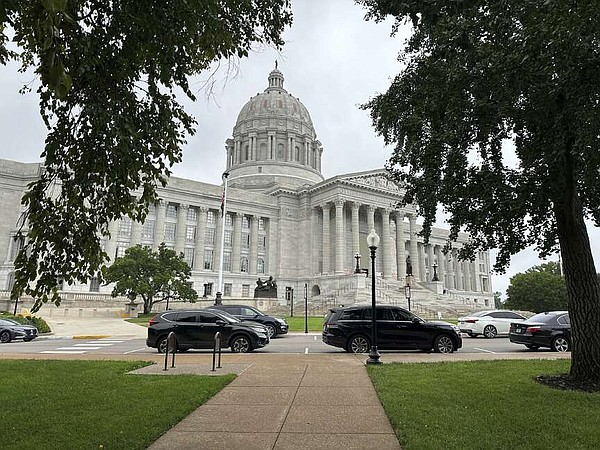
Several new laws passed this year by the Missouri General Assembly will take effect Wednesday. While Republican infighting dampened the productivity of the legislature, it still passed several major laws.
K-12 education changes
A major education package increased public school funding and provided more avenues for choice. The bill was controversial as it grew from 12 pages to more than 150 as provisions touching many areas of K-12 education were added through amendments as the bill moved through both the House and Senate. In the end, the bill narrowly passed 82-69 in the Missouri House, showing a divide over some education changes that transcended political party affiliations.
Among major provisions:
An increase in minimum teacher pay to $40,000 a year. The law doesn’t include ongoing funding from the state to pay for that increase. If the state doesn’t voluntarily provide increased funding through annual appropriations to cover the raise in future years, it will fall on school districts to cover the increase. School districts can supplement the state minimum at their own discretion.
The MOScholars program, which provides vouchers for low-income students to attend private school, saw increased funding in the bill. The program can now give out up to $75 million in grants each year compared to the previous limit of $50 million.
In a change discussed for several years, state school funding will increasingly become based on student enrollment rather than attendance.
A provision championed by Boone County Republicans Sen. Caleb Rowden and Rep. Cheri Toalson Reisch carved out special permission for the creation of a charter school in Boone County despite the objections of local school districts.
The law requires that beginning with the 2026-27 school year, school districts where charter school exist or that have more than 30,000 residents must get voter approval before moving to a four-day school week.
The law is expected to cost the state more than $450 million annually once fully implemented.
Public safety law
A bipartisan public safety law affects areas across the criminal justice system. While the bill will impact many Missourians, it was personal for a few.
Several provisions address incidents that gained widespread public attention:
Blair’s Law: Blair Shanahan Lane, an 11-year-old girl, was killed by a stray bullet July 4, 2011. Her mother, Michele Shanahan DeMoss, has been lobbying the state legislature to put penalties on celebratory gunfire ever since. Under the new bill, reckless shooting is a class A misdemeanor for the first offense and a felony after a second offense.
Valentine’s Law: There is also a provision increasing the penalty for evading at high speed that creates a risk of serious injury or death. The provision was included after St. Louis detective Antonio Valentine was killed in a 2021 high-speed chase.
Max’s Law: This establishes penalties for injuring or killing a police K-9 dog. The legislative effort began after a St. Joseph K-9 dog named Max was shot and killed on the job in 2021.
Other important provisions include:
The law increases the age at which juveniles can be tried as adults to 14 from the previous age of 12.
The law prevents a court from issuing an arrest warrant for someone for failing to pay a traffic ticket.
The law gives the Missouri Office of Prosecution Services the power to create a convictions review unit to investigate innocence claims. Incarcerated people would be able to apply for their cases to be reviewed by the unit, which can then submit its findings to the local prosecutor who brought the case.
Columbia will have to alter its citizens police review board to comply with the new state law. Going forward, such boards are limited to “reviewing, investigating, making findings and recommending disciplinary action against law enforcement officers.”
Property tax freeze
The legislature cleaned up a property tax freeze for seniors that was at the discretion of counties to implement. Last year, counties were given the option to freeze property taxes for those eligible for Social Security, but many declined, questioning the law’s legality and the wording about who was eligible for the benefit.
This session, lawmakers addressed those concerns, making it clear anyone age 62 or older could qualify for the credit on their primary residence. The law does allow for tax increases if there are substantial improvements to the home after the initial year the credit is applied. Boone County commissioners approved the credit beginning this year after the legislature took action. Seniors have until Oct. 1 to apply for the credit with information and application forms available on the county website.
Abortion provider funding
Republicans were able to pass a bill preventing state funds from going to abortion providers or any affiliates of abortion providers despite a lengthy Democratic filibuster.
The law targets Planned Parenthood, which cannot perform abortions in Missouri under state law, but is affiliated with the national organization that does provide abortions in other states. Medical centers with such affiliations will not be able to receive state funding, including reimbursements for any basic medical treatment or tests, even those unrelated to pregnancy, through the MO HealthNet program.
The legislature has tried and failed to defund providers like Planned Parenthood through the budget process for years. In 2022, a Cole County judge ruled defunding Planned Parenthood through the appropriations bills violated equal protection rights and a requirement that bills have only one subject.
When Attorney General Andrew Bailey challenged the judge’s ruling in the Missouri Supreme Court, his motion was struck down for procedural reasons because Bailey had failed to submit a contention to the equal protection claim.
Changes to property use
This law made several changes to government interaction with property owners. The law makes it illegal for any local government to put in place or enforce an eviction moratorium. Another provision bars local governments from requiring a home inspection prior to the sale of homes that are not new homes. The law also prevents homeowners associations from prohibiting homeowners from owning up to six chickens. The law also has provisions limiting the imposition of business license fees and some property taxes during a government mandated shutdown and forbids local governments from requiring churches or nonprofit organizations to provide electric vehicle charging stations.
Regulatory sandbox
One law is aimed at promoting entrepreneurship by limiting the number of regulations new businesses have to follow during their first three years of operation. Businesses would have to apply to participate and would have applications reviewed with specific regulations suspended. The act is designed to allow development of innovative ideas without a regulatory burden. The law creates a state Office of Entrepreneurship within the state Department of Economic Development.
The work of the Missouri News Network is written by Missouri School of Journalism students and editors for publication by Missouri Press Association member newspapers.
link