
Insurance companies use drones to check your property for potential risks
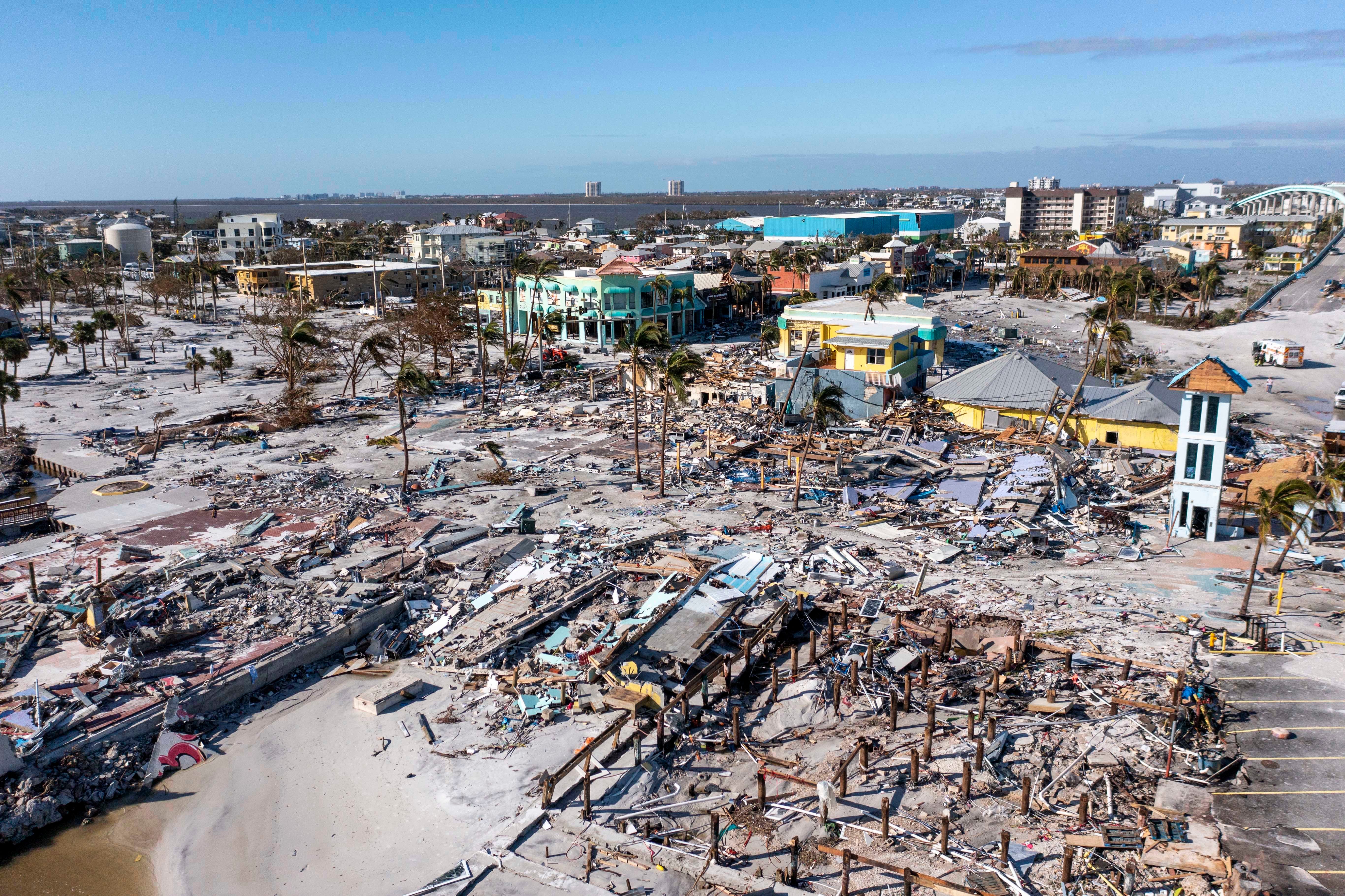

Drone shows Fort Myers Beach damage with homes and businesses wiped away
Drone captures aerial view of Ft. Myers Beach destruction from Hurricane Ian
Greg Lovett, Palm Beach Post
- Insurance companies are increasingly using aerial drones to inspect properties for underwriting purposes.
- Drones help insurers identify high-risk properties, which they say leads to fewer claims and lower costs for consumers.
- Florida law prohibits drone surveillance that violates a person’s reasonable expectation of privacy in their home, but consent may be in your insurance contract.
- Homeowners can challenge an insurer’s findings from a drone inspection, but it may require significant documentation.
Skinny-dippers and nude bathers beware: Managing disaster claims has pushed insurance fact-finding forward in a way that some may find a bit too revealing.
Insurers conducting spot inspections of homes are flying drones overhead to assess everything from the condition of tiles on a roof to potential safety risks from backyard trampolines to pools.
Their use is not actually new, but it can still catch homeowners off guard and leave them feeling intruded upon.
Aerial drones have been used for surveying disaster areas for the last 10 years. Hurricanes Harvey, Irma and Michael in 2017 and 2018 made their use even more prevalent in the industry, said Mark Friedlander, senior director of media relations for the industry-backed Insurance Information Institute.
In the last five years, insurance companies have found there’s no need to wait for a disaster — or a human inspector’s in-person visit — to scout out the condition of properties they are insuring.
Look, up in the sky!
Drones, Friedlander said, “capture the type of data insurers need to make prudent underwriting decisions and determinations if the property fits their risk profile. Weeding out high-risk properties leads to fewer claims and lower costs of home insurance for all consumers.”
Increasingly, with the help of better data analysis and scoring about what leads to a claim, insurance companies have taken steps to limit their liability before a claim happens. Canceling insurance policies based on a property’s condition has become more common and drones have become a key tool for doing it, Friedlander said.
It’s faster and more efficient, Friedlander said.
“Drones enable insurers to respond much quicker to natural disasters that include hurricanes, wildfires, floods and tornadoes,” Friedlander said. “Insurers are also using drones to make the home inspection and underwriting process more efficient and cost-effective. Additionally, conducting aerial inspections is much less intrusive and safer than sending an inspector to each home and having them climb on your roof.”
Here’s what to know about what might be up in the sky and what information it collects:
Is it legal for a drone to photograph your property?
As Google Earth, Zillow and others have been able to photograph private property from the air and use it, so, too, are insurance companies, Friedlander said.
Some places have banned the use of drones or severely restricted it. When in Rome, for example, check to make sure you’re not in Vatican City, which requires special permission for aerial photography, according to photography trade publications. Nearly two dozen countries either restrict it or ban it altogether: Barbados, Cuba, Israel, Nicaragua and Venezuela are among them, according to trade publications.
The Florida Legislature in 2015 passed a law titled “Freedom from Unwarranted Surveillance Act,” which prohibited recording property if it violated a person’s reasonable expectation of privacy in their home. That is defined as a prohibition on recording someone’s property in a way that goes beyond what’s observable from the ground.
Such photography is illegal, without written consent. And that permission is likely to be in what you agreed to in your insurance contract, according to Friedlander.
Can I challenge an insurer’s ruling on what they say the drone shows?
At the 5-year-old mark, the insurability of the roof on Mike Arman’s Ormond Beach property started getting challenged, he said. The drone pictures showed it “looked deteriorated,” according to his broker’s telling. Proving it was in insurable condition proved to be a challenge, but eventually Arman was able to convince his insurer, he recounted.
Still, it took two roofing inspectors, a copy of the papers noting the work had begun, the roofing company’s invoice and the final inspection.
“We’re entering a surveillance state and some of the information they are getting is not good,” said Arman, who is part of an effort to encourage aerospace companies to locate to south Volusia County, has a drone operator’s license and is a Federal Aviation Administration-certified advanced ground school instructor who teaches student pilots. “When you take a picture from a drone, the time of day makes a big difference.”
He joked that he was not sure if he was asked for a note from his mother.
“If they wanted that, they would need a Ouija board to get it,” he said.
Arman says the drone did bring back information that required him to ask his tenant to ditch the trampoline, however.
“It’s gone,” he said. “Probably removed by a trained crew wearing Hazmat suits and placed in a bomb-disposal truck.”
Anne Geggis is the insurance reporter at The Palm Beach Post, part of the USA TODAY Florida Network. You can reach her at [email protected].Help support our journalism. Subscribe today
link