
First-time homebuyer in WNY urges home inspections
Buyer beware: the demand for quality housing and the supply don’t exactly match up — and it could cost you if you’re not thorough enough.
“I looked on and off for a couple of years,” said Wendy Reynolds in her Buffalo home. “It’s a very daunting experience. I never thought I would ever own property.”
That’s an all too common thought for many — and it seems less possible when you take a deeper look into some spots on the market.
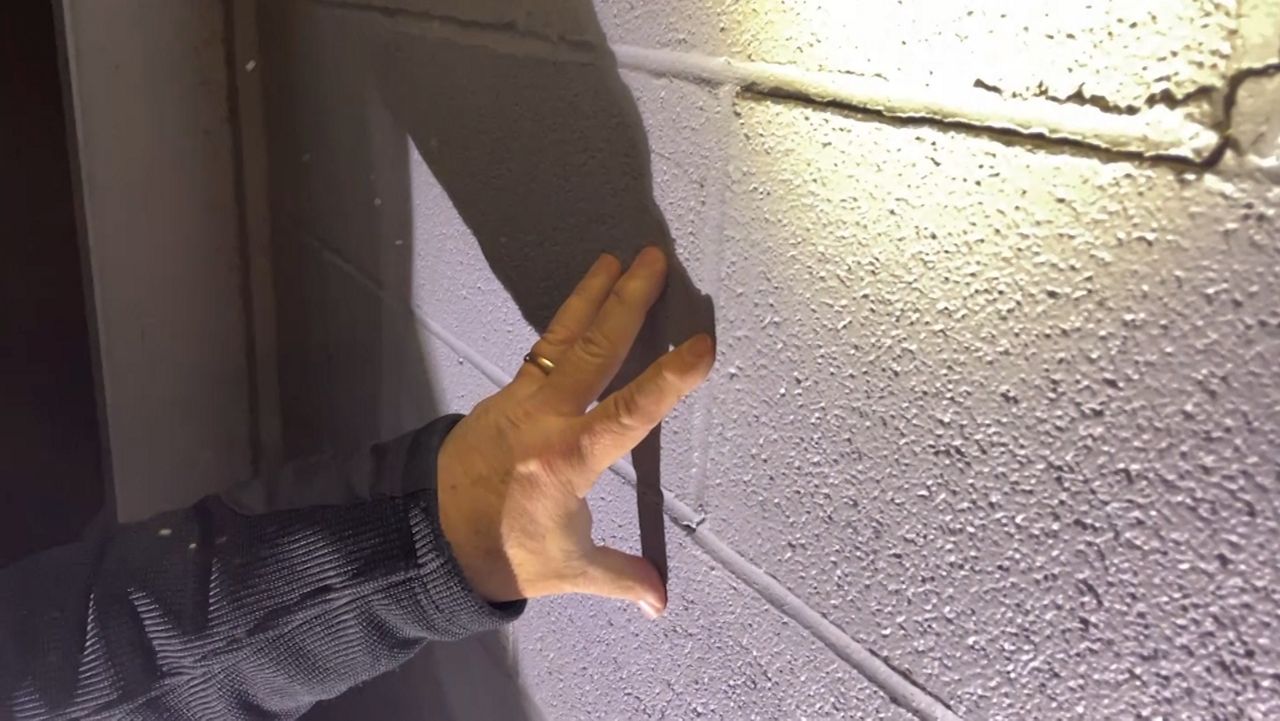
“I mean, if you step back to the sidewalk, you can definitely see the patches all over here,” said Dean Kempf, a New York State licensed home inspector.
Depending on the buying trends, location and so many other things, you could be setting yourself up for something that’s less picturesque than just grabbing the keys and moving in.
“You can definitely see that there’s movement on the foundation wall from the outside,” noted Kempf walking up to Reynolds’ house. “Here’s a giveaway where we got a broken foundation.”
He entered the home and continued to look through all of the things he would on any standard inspection.
“This house has probably been rented. It’s probably been a tenant structure. It’s probably been in the family for 30 years and nobody ever took care of it,” he said. “What they did is they collect the money on it. Once it reaches its ROI, they then they sell the structure and make another profit on top of it.”
And now it’s in the hands of Reynolds, a lifelong renter all over the country. Brooklyn-born, Western New York-raised, she was living in Orlando before deciding to invest in her family and future back in the 716. Along the way, she went through an extensive amount of research and even online classes.
“Mortgage, making a budget, so that I would be able to know exactly how much I had to spend comfortably,” she said. “But none of it covered anything like what to look for in a home inspection.”
She’s proud of saying no to several properties for varying reasons and leading with her head, not heart — but the fatigue in the market is real.
“Was I being too picky? Was I too gun shy? Was I making all the wrong decisions?” Reynolds asked. “I saw this house and on paper it had everything. It has everything that I needed.”
A 20-minute walk through the house she’s in now and what she describes as a rushed and pressured closing led her to a realization.
“That’s when I realized I, for all intents and purposes, had not done my due diligence the way I really thought I had,” said Reynolds.
Licensed inspector Jason Watson was brought on board to do a thorough job on the house.
“We’re going to go through a home as if we’re going to move in there. We’re going to look at it as if we’re about to buy it,” said Watson. “We’re going to look for the concerns that are our concerns.”
The concerns certainly mounted in this case.
“Not every homebuyer has this type of issue where they’re kind of pressured into maybe closing on a house,” said Watson. “So when I was walking through it [with] Wendy, what we saw was, it was astronomical.”
That’s where Kempf is giving us another detailed look through the issues and a benchmark for what looking through your potential sale should be.
“Minimum — minimum — two and a half hours inside of every single house. And then we have to recreate a report that takes another two and a half to three hours inside the office,” he noted. “Arrows, circles [and] squares pointing out exactly what you told these customers [and] clients during the inspection.”
Reynolds is hoping that her cautionary tale will help at least one other first-time homebuyer.
“Listen to your gut. If I had only listened to that little voice inside my head at that closing that said three times, ‘you probably shouldn’t sign this. You should probably ask some more questions,’ I might not be in the mess I’m in right now,” said Reynolds.
“So, in turn, what’s going to happen here is this is going to need some sort of repair sooner or later,” added Kempf, urging everyone to not waive a proper home inspection and find themselves in a spot like this. “Don’t be one of those people that regret what they bought because they move into a house. They pay over asking value for a house and then they can’t afford to make the repairs on the house.”
link